In UAE driving conditions, the car battery is one of the most overlooked yet most frequently failing components in any vehicle.
In Sharjah especially where extreme heat, stop-start traffic, and heavy AC usage are part of daily driving battery lifespan is significantly shorter than what most drivers expect.
After years of real workshop experience in Sharjah Industrial Area, one pattern is consistent:
most battery failures do not happen without warning. They happen because early signs were ignored.
Drivers usually assume a battery lasts “3 to 5 years,” but in UAE conditions, that number is often reduced depending on heat exposure and driving habits.
So the real question is not just when to replace a battery, but:
How do you know when your car battery is actually reaching the end of its life in UAE conditions?
Why Car Batteries Fail Faster in UAE Heat
Heat is the number one enemy of car batteries in the UAE.
Unlike cold climates where battery failure is mostly due to low temperatures, in Sharjah and surrounding areas, high heat accelerates internal chemical breakdown inside the battery.
When a vehicle is parked under direct sunlight, the battery temperature rises significantly, even when the engine is off. Over time, this leads to evaporation of internal electrolyte fluid and weakening of internal plates.
Heavy AC usage also plays a major role. Since the AC system is running almost continuously in UAE, the battery is frequently under load even during short trips and idle traffic conditions.
Short-distance driving makes the problem worse because the alternator does not get enough time to fully recharge the battery.
Real Battery Lifespan in Sharjah Conditions
From real workshop data and replacement patterns in UAE garages, battery lifespan typically falls within a more realistic range than global estimates.
Standard batteries usually last around 18 to 30 months under normal UAE driving conditions. High-quality batteries may last up to 3 years, but this depends heavily on usage patterns.
Vehicles that are frequently driven in traffic-heavy conditions, especially with high AC load and short trips, often experience earlier failure.
Luxury vehicles and German cars may have additional electrical load systems, which can also reduce battery lifespan if not properly maintained.
Early Warning Signs of Battery Failure
Car batteries rarely fail instantly. They show gradual warning signs that experienced technicians easily recognize during inspection.
One of the most common signs is slow engine cranking during startup. The engine takes slightly longer than usual to start, especially in the morning or after the car has been parked for several hours.
Another indicator is dimming headlights or fluctuating interior lights when the engine is idling. This usually suggests unstable voltage output.
In some cases, dashboard warning lights may appear briefly or intermittently, indicating voltage irregularity in the electrical system.
Frequent need for jump-starts is a clear sign that the battery is no longer holding charge effectively and is nearing complete failure.
What Happens During a Professional Battery Replacement
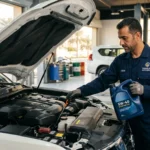
A proper battery replacement in a professional workshop involves more than just removing the old battery and installing a new one.
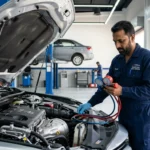
Technicians first test the existing battery health using load testing equipment to confirm whether the issue is battery-related or alternator-related.
The charging system is also checked to ensure the alternator is functioning correctly and not causing overcharging or undercharging issues.
Once confirmed, the old battery is safely removed, and terminals are cleaned to remove corrosion buildup, which can affect electrical conductivity.
The new battery is then installed with correct polarity, followed by system reset and voltage stabilization checks to ensure proper electrical performance across the vehicle.
Common Causes of Battery Damage in UAE Vehicles
In Sharjah workshops, battery failure is usually linked to a combination of environmental and usage factors.
Excessive heat exposure remains the most common cause, as it speeds up internal chemical wear.
Another frequent issue is alternator imbalance, where improper charging either undercharges or overcharges the battery, reducing its lifespan.
Electrical drain caused by aftermarket accessories or faulty wiring can also lead to premature battery failure.
Short trips and frequent engine starts without full recharge cycles further reduce battery efficiency over time.
Preventive Maintenance for Longer Battery Life
Experienced technicians follow a few simple but effective preventive practices to extend battery life in UAE conditions.
Regular voltage checks help detect early weakening before complete failure occurs.
Cleaning battery terminals prevents corrosion buildup, which can restrict proper electrical flow.
Avoiding long periods of vehicle inactivity is also important because idle batteries gradually lose charge, especially in hot climates.
Ensuring the alternator is functioning correctly during routine servicing helps maintain proper charging balance.
Real Battery Replacement Cost in Sharjah
Battery replacement cost in UAE depends on vehicle type and battery quality.
Standard car batteries typically range from AED 200 to AED 400.
Mid-range batteries for SUVs and higher load vehicles range between AED 350 to AED 600.
Premium or German vehicle batteries with advanced electrical systems can cost AED 600 to AED 1200 or more.
While price varies, choosing a reliable battery is important because low-quality batteries often fail quickly in UAE heat conditions.
FAQs
How long does a car battery last in UAE?
Typically 18 to 30 months depending on heat exposure and driving conditions.
What are the first signs of a weak battery?
Slow engine start, dim lights, and frequent jump-start requirement.
Can heat damage a car battery?
Yes, extreme heat significantly reduces battery lifespan in UAE.
Should I replace battery or repair it?
Car batteries are not repairable; they must be replaced when weak.
How do I check battery health?
Using voltage testing or load testing at a professional workshop.
Conclusion
In UAE driving conditions, car batteries work under constant stress due to heat, traffic, and electrical load demands.
From real workshop experience in Sharjah, battery failure is almost always predictable not sudden.
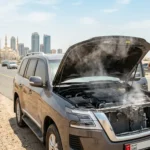
Understanding early warning signs and following proper maintenance practices can prevent unexpected breakdowns and roadside failures.
Regular testing and timely replacement remain the most reliable way to ensure smooth vehicle operation in harsh UAE conditions.