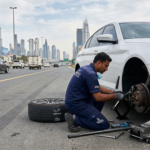
In UAE driving conditions, transmission systems are under constant stress due to heat, traffic congestion, and stop-and-go driving patterns especially in busy cities like Sharjah, Dubai, and Ajman.
Unlike engine problems that often give gradual and noticeable performance changes, transmission issues usually start quietly. By the time most drivers realize something is wrong, the damage is already progressing.
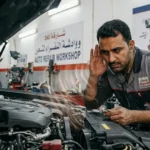
After years of hands-on diagnostic work in Sharjah Industrial Area workshops, one clear reality stands out:
Transmission failure is rarely sudden it is almost always preceded by early warning signs that drivers ignore.
The challenge is that most of these symptoms are subtle, inconsistent, or mistaken for minor driving behavior changes.
This guide is based on real workshop experience, helping you identify early transmission issues before they turn into expensive repairs or full gearbox replacement.
Why Transmission Systems Fail Faster in UAE Conditions
Transmission systems in UAE vehicles operate under heavier load conditions compared to many other regions.
The primary stress factor is heat. High ambient temperatures in Sharjah, combined with engine heat buildup in traffic, directly affect transmission fluid stability. When transmission fluid overheats, it loses its ability to properly lubricate internal components.
Stop-and-go traffic is another major contributor. Constant shifting between gears in congested roads increases mechanical wear on automatic transmissions, especially in older vehicles or poorly maintained systems.
Dust and environmental conditions indirectly affect transmission health as well. Clogged cooling systems reduce overall heat dissipation, causing transmission temperatures to rise beyond optimal levels.
Over time, these conditions accelerate wear on clutch packs, solenoids, and hydraulic systems inside the transmission.
Early Warning Signs of Transmission Problems
Transmission issues almost always begin with small behavioral changes in vehicle performance.
One of the earliest signs is delayed gear engagement. When shifting from park to drive or reverse, the vehicle takes slightly longer than normal to respond. This delay often indicates pressure loss inside the transmission system.
Another common symptom is gear slipping. The engine revs increase, but the vehicle does not accelerate proportionally. This is often mistaken for engine power loss, but it is usually a transmission issue.
Rough or jerky shifting is also a strong indicator. Instead of smooth gear transitions, the driver feels sudden jerks or hesitation during acceleration.
In some cases, unusual noises such as whining, humming, or clunking sounds may appear during gear changes. These sounds typically indicate internal wear or fluid-related issues.
Transmission warning lights on the dashboard should never be ignored, even if the vehicle appears to be driving normally at the moment.
How Transmission Fluid Condition Affects Performance
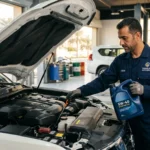
Transmission fluid plays a critical role in maintaining hydraulic pressure, lubrication, and cooling inside the gearbox.
In UAE conditions, transmission fluid degrades faster due to continuous heat exposure. As fluid ages, it becomes darker, thicker, and less effective at maintaining proper hydraulic pressure.
Low or contaminated fluid often leads to erratic gear behavior, overheating, and internal friction.
In many workshop cases, simple fluid replacement at the right time could have prevented major transmission damage and expensive rebuilds.
However, once internal components begin to wear due to poor lubrication, fluid replacement alone is no longer enough.
What Happens During Professional Transmission Diagnosis
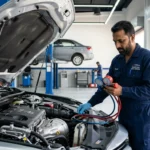
A proper transmission inspection is a structured diagnostic process, not a visual check.
Technicians begin by scanning the vehicle for error codes using advanced diagnostic tools. These codes help identify issues related to solenoids, sensors, or pressure regulation systems.
Next, transmission fluid condition is analyzed for color, smell, and viscosity. Burnt or dark fluid is often a sign of overheating or internal wear.
Road testing is also performed to observe real-time shifting behavior under different speeds and loads. This helps identify issues that may not appear during stationary diagnostics.
In more advanced workshops, hydraulic pressure testing is conducted to evaluate internal transmission performance under operating conditions.
Only after full diagnostics is a repair recommendation made, which may include fluid change, sensor replacement, or internal repair depending on severity.
Common Transmission Problems in UAE Vehicles
In Sharjah workshops, several transmission issues are frequently observed across different vehicle types.
One of the most common is overheating transmission systems, often caused by prolonged driving in heavy traffic and insufficient cooling.
Solenoid failure is another frequent issue in automatic transmissions. Faulty solenoids disrupt gear shifting signals, leading to erratic performance.
Worn clutch packs are also common, especially in vehicles with delayed maintenance schedules. This leads to slipping and poor acceleration response.
In some cases, torque converter issues result in vibration and reduced power transfer efficiency.
Modern vehicles with CVT transmissions may experience belt or pulley wear, leading to shuddering or inconsistent acceleration.
Preventive Maintenance for Transmission Longevity
Experienced technicians in UAE follow preventive practices to extend transmission lifespan.
Regular transmission fluid checks are essential, especially in high-mileage vehicles. Early detection of fluid degradation helps prevent internal damage.
Avoiding aggressive acceleration in traffic-heavy conditions reduces unnecessary stress on the gearbox.
Ensuring proper cooling system performance also indirectly protects the transmission, as overheating engines often contribute to transmission heat buildup.
Timely service intervals, based on actual driving conditions rather than generic manufacturer timelines, play a critical role in preventing failure.
Real Cost of Transmission Repair in Sharjah
Transmission repair costs in UAE vary significantly depending on damage severity and vehicle type.
Basic transmission service or fluid replacement typically ranges between AED 300 and AED 700.
Sensor or solenoid repairs may cost between AED 600 and AED 1500 depending on vehicle model.
Major transmission repairs or rebuilds can range from AED 2500 to AED 8000 or more, especially for German and luxury vehicles.
Full transmission replacement is the most expensive option and can exceed AED 10,000 in some cases.
This cost difference highlights why early detection is extremely important.
FAQs
What are early signs of transmission failure?
Delayed shifting, gear slipping, jerking, and unusual noises.
Can I drive with transmission problems?
It is not recommended, as it can increase internal damage.
How long does a transmission last in UAE?
Typically 5–8 years depending on maintenance and driving conditions.
Does transmission fluid need regular change?
Yes, especially in UAE heat and traffic conditions.
What causes transmission overheating?
Heavy traffic, low fluid levels, and poor cooling efficiency.
Conclusion
Transmission systems in UAE vehicles operate under continuous stress due to heat, traffic congestion, and demanding driving conditions.
From real workshop experience in Sharjah, most transmission failures are preventable if early symptoms are identified and addressed on time.
Ignoring small warning signs often leads to major repairs that could have been avoided with simple maintenance.
Proper diagnostics and timely servicing remain the most effective way to extend transmission life and ensure smooth vehicle performance in UAE conditions.